P0430 — Catalyst System Efficiency Below Threshold (Bank 2)
Bank 2's catalytic converter isn't cleaning exhaust efficiently — the same story as P0420, on the other cylinder bank of a V-type engine.
Like P0420, the fix is either a cheap oxygen sensor or an expensive converter — confirming which with live data is the whole game.
Common causes, most likely first
Lazy or failed downstream O2 sensor (Bank 2)
The post-cat sensor on Bank 2 responds slowly or mirrors the front sensor, making the ECU believe the converter quit.
Aging or contaminated catalytic converter
Years of service, oil burning or coolant ingestion degrade the Bank 2 converter coating.
Exhaust leak near the Bank 2 sensors
A manifold or flange leak on that bank pulls in outside air and skews the efficiency reading.
Misfire or rich/lean running on Bank 2
Unburned fuel overheats and poisons the converter — fix the upstream cause first.
Wiring or PCM calibration fault
Corroded sensor wiring, or an over-sensitive monitor addressed by a manufacturer TSB.
Symptoms you'll notice
- Check Engine light — often the only sign, steady.
- Failed emissions / smog test — the usual real-world consequence.
- Slight fuel-economy drop — mild if present.
- Sulfur / rotten-egg smell — occasional, points at the converter itself.
P0420 and P0430 together on a V6/V8 usually means a shared cause — fuel trim, exhaust back-pressure or aging converters — rather than two coincidental failures.
Diagnostic steps
Read all codes & freeze frame
Misfire or fuel-trim codes alongside P0430 change the diagnosis — fix those first.Tool: any scan tool
Graph Bank 2 upstream vs downstream O2
The rear sensor should hold steady near 0.6–0.7 V; if it oscillates like the front one, the converter is failing.Tool: live data + graphing
Check Mode 6 catalyst results for Bank 2
A value hovering at the threshold confirms a marginal converter rather than a sensor glitch.Tool: Mode 6 / on-board test
Inspect Bank 2 exhaust for leaks
Manifold, flanges and gaskets around both sensors — a small leak mimics a dead cat.Tool: visual + smoke test
Compare with Bank 1 data
On V engines, contrasting the two banks quickly separates a converter fault from a shared engine condition.Tool: live data
Repair & cost
Estimates are indicative and vary by region, vehicle and parts choice. Confirm the actual cause with live data before buying parts.
The right iCarsoft tool for P0430
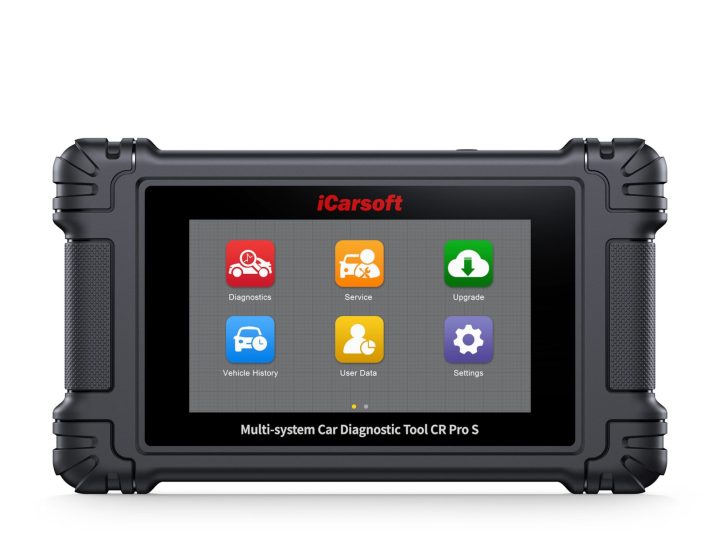
iCarsoft CR Pro S
CR Pro S graphs Bank 1 and Bank 2 oxygen sensors side by side and reads Mode 6 catalyst monitors, so you can prove whether the Bank 2 converter is actually dead before spending converter money.
Analyze your exact vehicle with the AI Co-Pilot
Enter your make, model and what you're seeing — the iCarsoft AI assistant will rank the likely causes for your car and suggest the next test.
Try the AI Co-PilotP0430 FAQ
- What is Bank 2?
- The cylinder bank that does NOT contain cylinder 1 — only V-type and boxer engines have one. Inline engines never set P0430.
- Can I drive with P0430?
- Usually yes for short trips; drivability is rarely affected. It will fail an emissions test and should be diagnosed before long-term driving.
- P0420 and P0430 together — both converters dead?
- Not necessarily. Simultaneous codes usually point to a shared cause such as fuel trim problems, a failing upstream sensor pair, or exhaust restrictions.
Comments
No comments yet — be the first to share your experience.
Leave a comment
Comments are reviewed before publishing. Your email is required but never shown.