P0238 — Turbocharger Boost Sensor A Circuit High
The boost-pressure sensor signal is pegged above its valid range — an electrical fault in the sensor, its wiring, or the connector, not usually the turbo itself.
Circuit-high codes are electrical by definition — this is a multimeter-and-connector job far more often than a turbo job.
Common causes, most likely first
Failed boost pressure (MAP) sensor
Internal failure drives the signal to the rail — the most frequent cause.
Signal wire shorted to voltage
Chafed insulation lets the signal touch a 5 V or 12 V feed.
Corroded or damaged connector
Bent pins and green crust fake out-of-range readings.
Open ground to the sensor
A lost ground floats the output high.
ECU input fault
Rare, diagnosed by elimination.
Symptoms you'll notice
- Reduced power / limp mode — the ECU limits boost with an untrusted sensor.
- Check Engine light — often immediate and steady.
- Implausible boost readings — pegged high on live data.
- Sluggish turbo response — conservative control strategy.
Diagnostic steps
Read the boost sensor on live data, key-on engine-off
It should match barometric pressure (~100 kPa). Pegged high with the engine off = electrical fault confirmed.Tool: live data
Inspect connector and wiring
Unplug, check pins for corrosion/bending, wiggle-test the harness while watching the reading.Tool: visual + live data
Verify 5 V reference and ground
Back-probe: reference present, ground good, signal within range.Tool: multimeter
Compare against BARO/MAP
Cross-check with the engine's other pressure sensors at key-on — they should agree.Tool: live data
Replace the sensor
With wiring proven, the sensor is the fix.Tool: hand tools
Repair & cost
Estimates are indicative and vary by region, vehicle and parts choice. Confirm the actual cause with live data before buying parts.
The right iCarsoft tool for P0238
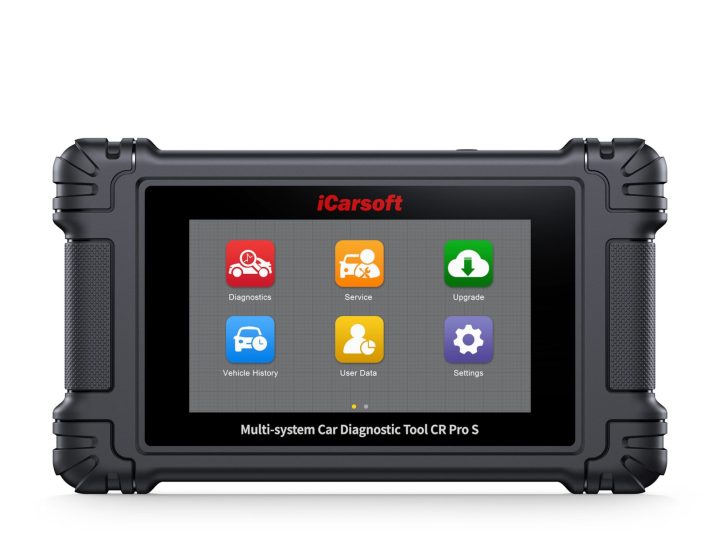
iCarsoft CR Pro S
The key-on sensor-vs-barometric comparison that cracks P0238 is a ten-second check on CR Pro S live data — and wiggle-testing while graphing catches intermittent wiring faults a static meter misses.
Analyze your exact vehicle with the AI Co-Pilot
Enter your make, model and what you're seeing — the iCarsoft AI assistant will rank the likely causes for your car and suggest the next test.
Try the AI Co-PilotP0238 FAQ
- Is my turbo failing with P0238?
- Unlikely — "circuit high" is an electrical signal fault. The turbo itself is only implicated by mechanical codes (over/underboost) or physical symptoms.
- Can I drive with P0238?
- The car typically limits boost, so it's driveable but flat. Extended limp-mode driving is safe for the engine but unpleasant.
- Sensor or wiring — how do I know?
- Key-on engine-off: if the reading is pegged high, unplug the sensor. Reading changes = sensor side; unchanged = wiring/ECU side.
Comments
No comments yet — be the first to share your experience.
Leave a comment
Comments are reviewed before publishing. Your email is required but never shown.